

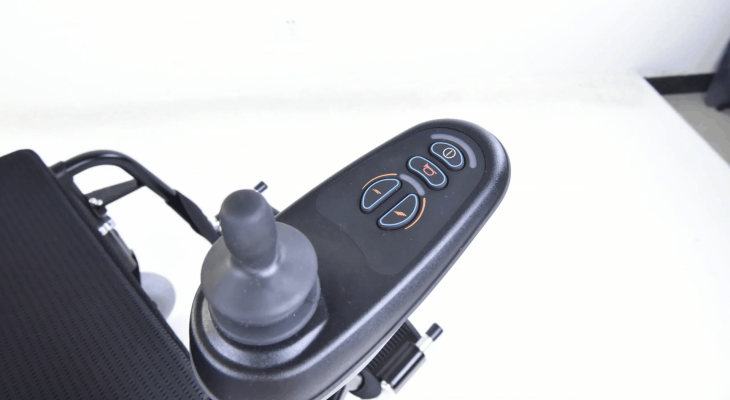
When using a powered wheelchair, you want to keep control in your hands. The most important factor providing this control is the joystick response time. The moment you move the joystick, the wheelchair should respond immediately. Fast response makes driving both safe and smooth. Therefore, the correct response time completely changes the user experience.
The faster a powered wheelchair responds, the better you can control it. Proper adjustment makes a difference in every drive. Response time becomes especially critical in narrow spaces, ramps, and indoor environments because:
Fast response makes maneuvering easier
Smooth movement improves control
Balanced driving prevents collisions
Natural feel increases user confidence
Driving quality largely depends on correct response timing.
No technical device is required. You can understand it in seconds while driving:
If movement starts instantly when you touch the joystick, timing is correct
If there is no delay during turns, control is healthy
If start and stop feel smooth, adjustment is correct
If movement starts late or the chair rolls forward after stopping, response timing is not ideal
Some models perform better:
Kensa K-250 provides superior control in narrow spaces
Kensa K-200 offers smooth start and fast command recognition
Kensa K-111 PG VR2 provides high precision with sensitive joystick
Kensa K-100 / K-150 deliver stable and controlled response
PG VR2 and NewVSI joystick units are globally known for response performance.
Technicians adjust response time via the control panel:
Optimize acceleration timing
Smooth deceleration
Reduce sudden acceleration
Adjust sensitivity to user hand speed
These adjustments improve both safety and smoothness.
Not everyone needs the same response:
Elderly users: softer, slower response is safer
Low muscle strength: sensitive, fast response improves control
Active users: fast response enables quick maneuvering
Correct adjustment improves every drive:
Smooth starts without jolts
More stable turns
Less user energy consumption
Better directional control
Reduced fatigue during long use
Many users pay attention to joystick feel when choosing a wheelchair.
Yes. Weak battery or strained motor slows response. Therefore:
Charge battery regularly
Maintain motor properly
Check cable connections
These steps preserve response speed and improve driving.
Contact technical service immediately. Usually:
Battery level drops
Joystick potentiometer wears
Connections loosen
Settings shift
Technicians can fix it within minutes.
Touch joystick and check instant movement
Check delay during turns
Observe forward drift after stopping
Listen if motor sound matches movement
These checks help choose the right model.
Joystick response time is one of the most important factors determining driving quality. When properly adjusted, driving becomes safer and smoother. Always evaluate response timing when buying or servicing a wheelchair.
Copyright © 2026 AdresGezgini. All rights reserved.